
Introduction: Understanding the Icons of Formalwear
A perfectly tailored jacket has the power to transform a man’s presence. Within the realm of evening wear, two garments reign supreme: the tuxedo and the dinner jacket. These terms are often used interchangeably, yet each carries its own history, rules and nuances. In North America, the word tuxedo evokes black‑tie galas and James Bond; in Britain and Australia, the same garment is called a dinner jacket. By mastering the differences, you’ll know exactly what to wear for every formal invitation. This in‑depth guide uncovers their shared origins, unique features, occasions to wear them, and styling secrets to ensure you stand out with sophistication.
Origins and Terminology
A Tale of Two Names
Both the tuxedo and the dinner jacket originate from 19th‑century evening attire. In Britain, gentlemen transitioned from tailcoats to shorter “dinner jackets” for private club dinners. When the style crossed the Atlantic via New York’s Tuxedo Club in the 1880s, it became known as the tuxedo. Today, North Americans say “tuxedo,” while Europeans and Australians usually say “dinner jacket” or “dinner suit.” Continental Europeans sometimes call any evening jacket a smoking jacket, adding to the vocabulary confusion.
What’s in a Name?
Modern style authorities explain that “dinner jacket” often refers solely to the jacket, whereas “tuxedo” denotes the full matching ensemble. The difference lies less in structure and more in colour, fabric and context. A helpful terminology chart shows that tuxedo corresponds to dinner jacket in British English and smoking in Continental Europe. Knowing these synonyms is useful when shopping abroad or reading tailoring guides.
What Defines a Tuxedo?
Components and Construction
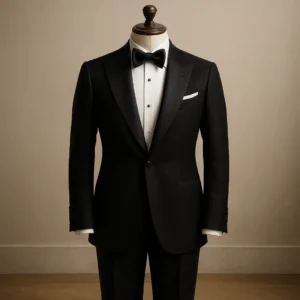
A tuxedo is the embodiment of classic black‑tie attire. It consists of:
Matching jacket and trousers: Crafted in black or midnight blue wool, the jacket and trousers form a seamless set.
Satin or grosgrain details: The lapels, buttons and a stripe down the trouser outseam are faced in satin or grosgrain. This contrast creates the tuxedo’s signature polish.
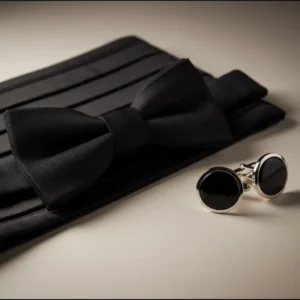
Formal shirt and neckwear: A white pleated or pique‑front shirt, typically with French cuffs, accompanies the jacket. A self‑tie black bow tie is essential.
Cummerbund or waistcoat: These pieces conceal the trouser waistband, ensuring a clean vertical line.
Patent‑leather shoes: Highly polished Oxfords or pumps finish the look.
Fabric and Fit
Tuxedos are usually made from superfine wool or wool–silk blends, offering structure and a subtle sheen. Midnight blue is a sophisticated alternative to black; it often appears deeper on camera and under artificial light. A properly constructed tuxedo uses a full canvas for lasting shape and has a higher trouser rise to align with the jacket’s buttoning point. Lapels may be peak or shawl; both are equally formal but impart different vibes: peak lapels convey assertiveness, while shawl collars evoke old Hollywood romance.
When to Wear a Tuxedo
Strictly black‑tie events: Formal evening weddings, award ceremonies, operas and diplomatic dinners call for a classic tuxedo. The uniform look shows respect for tradition.
Indoor or cool‑weather occasions: Heavy barathea or wool blends provide comfort in air‑conditioned venues and during winter.
When in doubt: If the invitation is ambiguous but leans formal, a tuxedo is the safest choice. It never looks out of place.
Colour and Fabric Play
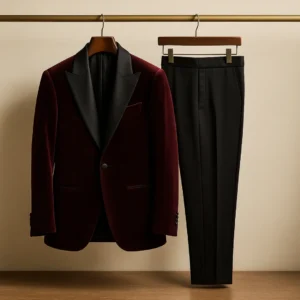
A dinner jacket refers to the jacket component of black‑tie dress and often denotes coloured or textured variations. Where tuxedos are uniform, dinner jackets invite creativity:
Fabrics: Velvet, barathea wool, jacquard patterns and plush mohair are popular choices.
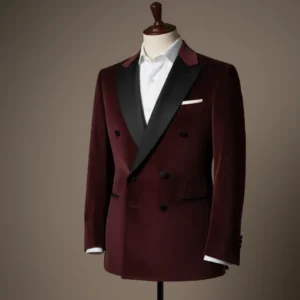
Colours: Ivory, burgundy, midnight blue, emerald and patterned jackets stand out while remaining elegant.
Pairing: Typically, a dinner jacket is worn with black tuxedo trousers to maintain balance.
Detailing Differences
Dinner jackets may have self‑faced or velvet lapels, decorative buttons and contrasting trim. Some are double‑breasted or feature unique pocket placements. The shirts and accessories mirror those of a tuxedo—white shirt, bow tie, waist covering and polished shoes. In some cases, a dinner jacket can be worn with a regular tie for a slightly less formal look.
When to Wear a Dinner Jacket
Festive or creative occasions: Holiday parties, New Year’s Eve, artistic galas and red‑carpet events allow for colour and texture.
Warm‑weather events: Summer weddings, cruises and tropical destinations favour lighter fabrics and bright hues.
Black‑tie optional: When the dress code is flexible, a dinner jacket offers individuality while honouring the black‑tie spirit. Evening ceremonies are ideal; daytime events lean toward suits.
White dinner jackets: Historically worn during warm months to deflect heat, white dinner jackets are statement pieces best reserved for special occasions and should be avoided at someone else’s wedding.
Dinner Jacket vs Blazer
A dinner jacket is not a blazer. Blazers are significantly less formal, often made of flannel or linen and unstructured. Dinner jackets are structured, canvas‑lined and typically have satin lapels. Save blazers for casual settings.
Key Differences at a Glance
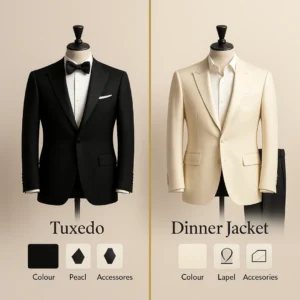
While both garments belong to the black‑tie family, a few fundamental differences help you decide which to wear:
| Feature | Tuxedo | Dinner Jacket |
|---|---|---|
| Colour palette | Uniform black or midnight blue with matching trousers | Coloured or patterned jacket paired with black trousers |
| Lapels & trim | Satin or grosgrain facings; satin stripe on trouser legs | May feature velvet or self‑faced lapels; trousers lack stripe |
| Buttons | Satin‑covered single or double buttons | Plain or decorative buttons; materials may contrast |
| Formality | Strict black‑tie and formal functions | Slightly less formal, suited to festive or warm‑weather events |
| Occasions | Awards galas, formal weddings, opera | New Year’s Eve parties, summer weddings, creative galas |
| Shoes | Patent‑leather Oxfords or pumps | Polished leather shoes or velvet slippers |
Choosing the Right Look for the Event
When to Choose a Tuxedo
Mandatory black‑tie events: Invitations marked “Black tie” or “formal” require the classic tuxedo. This includes gala dinners, charity balls, formal evening weddings and diplomatic receptions.
Indoor or cooler climates: Heavy barathea and wool blends are comfortable indoors. A tuxedo is perfect for winter affairs or air‑conditioned venues.
Conservative dress codes: Corporate events or black‑tie occasions where creativity might be discouraged call for the traditional tuxedo. It conveys refinement and discipline.
When to Choose a Dinner Jacket
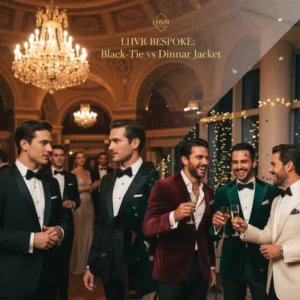
Festive celebrations: Colourful or textured dinner jackets suit New Year’s Eve, awards after‑parties and birthdays. They deliver flair without sacrificing formality.
Warm‑weather gatherings: Ivory, burgundy or patterned dinner jackets keep you cool at beach weddings, garden parties and cruises. Their lighter fabrics breathe better in heat.
Black‑tie optional: When the invitation says “black‑tie optional,” you can honour tradition while expressing personality through a dinner jacket.
Evening ceremonies: Dinner jackets are ideal for events held after 6 p.m.; earlier events lean toward suits.
Styling & Accessories: Completing the Look
The Shirt
Fabric: Choose crisp white cotton with a pleated or pique front. French cuffs elevate the ensemble and provide space for cufflinks.
Collar: Wing collars are traditional for tuxedos; turndown collars modernise the look and suit dinner jackets.
Avoid colour: Stick to white to maintain focus on the jacket.
Neckwear
Bow tie: A self‑tie bow tie is essential. Match the texture to the jacket—velvet for velvet jackets, silk for wool jackets.
Ties: Slim black ties can work with dinner jackets for less formal settings, but avoid them for strict black‑tie events.
Waist Covering
Cummerbund: Wear pleats facing up; match it to the lapels. It smooths the transition between shirt and trousers.
Waistcoat: A low‑cut vest adds structure and covers the waistband. Ensure it stays hidden beneath the jacket.
Footwear
Patent leather: Oxford shoes or opera pumps deliver mirror shine.
Velvet or polished loafers: Suitable for dinner jackets and creative looks.
Accessories
Pocket square: A white silk pocket square folded simply completes the look. Avoid matching the jacket colour exactly; contrast subtly.
Cufflinks and studs: Choose classic materials like mother‑of‑pearl, onyx or brushed metal. Avoid novelty designs in formal settings.
Watch: A minimalist dress watch with a black leather strap blends into evening wear. Avoid oversized or sporty designs.
Dispelling Common Myths
Dinner jackets are less formal: When styled correctly, dinner jackets comply fully with black‑tie etiquette. The perceived formality depends on fabric and context.
Colours aren’t allowed: Midnight blue is a traditional choice. Rich colours and patterns are acceptable for festive occasions.
Tuxedos must be black: Midnight blue, deep green or burgundy can be worn as long as the ensemble remains cohesive.
White jackets suit any event: White dinner jackets are best reserved for tropical settings and should be avoided at others’ weddings unless you’re the groom.
Dinner jackets vs blazers: A dinner jacket is structured and formal, whereas a blazer is casual and made from lighter fabrics.
Modern Interpretations
Today’s designers reinterpret black‑tie codes through slim silhouettes, creative textiles and eco‑friendly fabrics. Sustainable wool blends and plant‑based dyes are becoming popular. Double‑breasted dinner jackets, velvet tuxedos and contrasting lapels allow men to express individuality while honouring tradition. Always consider context and choose styles that feel authentic to you.
Conclusion: Dressing with Intent
The tuxedo and dinner jacket are timeless investments that celebrate craftsmanship, culture and confidence. Choosing between them is less about rules and more about understanding the event, climate and your personal taste. When you know the origins, key differences, appropriate occasions and styling nuances, you can navigate any black‑tie invitation with ease and elegance. Whether you opt for the understated authority of a tuxedo or the expressive charm of a dinner jacket, ensure the fit is impeccable and the details intentional. At LHVR BESPOKE, we craft each garment with meticulous attention to detail, merging Italian tailoring techniques with Indian sensibilities. Ready to experience true bespoke? Book your fitting here and step into a world where every stitch tells your story.